
Are You Loving Your Partner the Way They Need to Be Loved?
Most people enter a relationship believing that love should come naturally. They care deeply, make an effort and assume their partner will recognize those efforts. Yet many couples still end up feeling disappointed, misunderstood or emotionally neglected.
The problem is not always a lack of love. Sometimes, it is a mismatch between how love is given and how it needs to be received.
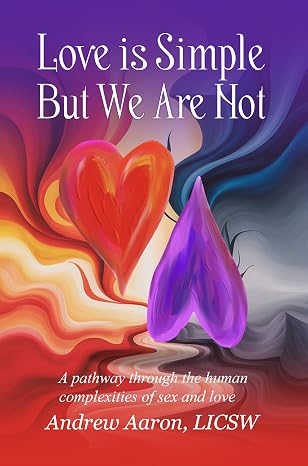 In Love Is Simple, But We Are Not: The Pathway Through the Human Complexities of Sex and Love, Andrew Aaron, LICSW, explores the emotional patterns that shape romantic relationships. Drawing from more than two decades of professional observations, he examines how openness, communication, affection, sexuality, self-awareness and emotional strength influence the way people love one another.
One of the book’s most practical lessons is that knowing someone loves you is not always the same as feeling loved by them.
A partner may express love by working hard, paying bills, solving problems or remaining dependable. Those efforts are meaningful. However, the other partner may feel most loved through affectionate touch, thoughtful conversation, verbal reassurance, shared time or emotional attention.
When the wrong kind of emotional nourishment is repeatedly offered, both partners can become frustrated. One thinks, “I do everything for you,” while the other quietly wonders, “Why do I still feel lonely?”
Aaron illustrates this idea by comparing love to feeding two different pets. A dog and a fish both need nourishment, but they cannot thrive on the same food. In the same way, loving actions must suit the unique person receiving them. A gesture can be generous and sincere while still failing to meet a partner’s most important emotional need.
This is why assumptions are dangerous in relationships. Many people assume that a loving partner should automatically know what they need. When that expectation is not met, hurt can quickly turn into criticism, anger, withdrawal or punishment.
However, disappointment is not always proof that your partner does not care. It may simply mean they have not yet learned how to love you effectively.
Healthy couples teach each other.
That teaching works best through clear, specific and respectful communication. Instead of saying, “You never listen to me,” a partner might say, “I feel closer to you when you put your phone away and listen without interrupting.” Instead of saying, “You are never affectionate,” they might explain, “Small touches throughout the day help me feel connected to you.”
Aaron emphasizes that anger is rarely an effective teacher. Criticism often creates defensiveness, while thoughtful guidance gives a partner a genuine opportunity to respond differently. Each person is the expert on their own emotional needs, so expressing those needs clearly is an important part of loving well.
The question is not about whether you love your partner. It is whether your partner regularly experiences that love in a way that is meaningful to them.
Love Is Simple, But We Are Not encourages readers to move beyond good intentions and become more conscious, responsive partners. Andrew Aaron, LICSW reminds us that lasting love grows when couples remain curious, ask what the other person needs and make the effort to deliver love in a form the heart can recognize.
